Garment Factory Audit Guide: Clothing Sample Development and Apparel Testing and Quality Control Explained
- Share
- Issue Time
- Jun 25,2026
Summary
Discover why garment factory audit procedures, clothing sample development, and apparel testing and quality control are essential when choosing an apparel manufacturing partner.

Why Quality Assurance Matters More Than Ever in Apparel Manufacturing
The apparel industry has become increasingly competitive. Whether you are launching a startup clothing brand, managing a private label collection, or sourcing products for large retail chains, product quality directly impacts customer satisfaction, profitability, and brand reputation.
Many sourcing failures occur because buyers focus exclusively on pricing while overlooking critical manufacturing processes such as garment factory audit, clothing sample development, and apparel testing and quality control.
Successful brands understand that quality is not created during final inspection alone. Instead, quality must be integrated into every stage of the production process—from factory evaluation and sample development to bulk manufacturing and final shipment.
This guide explains how buyers can use factory audits, sample development, and quality control systems to reduce risk and improve product outcomes.
Understanding the Purpose of a Garment Factory Audit
A garment factory audit is a structured evaluation process used to assess whether a manufacturer has the capabilities, systems, equipment, and management practices necessary to meet production requirements.
Before placing large orders, professional buyers often conduct audits to verify:
- Production capacity
- Quality systems
- Compliance standards
- Technical capabilities
- Factory management
- Workforce structure
- Equipment condition
A thorough garment factory audit helps brands avoid costly production problems later.
Why Buyers Conduct Garment Factory Audits
Choosing the wrong supplier can lead to:
- Product defects
- Delayed deliveries
- Inconsistent quality
- Communication issues
- Increased costs
A factory audit provides transparency before production begins.
Risk Reduction
Buyers can identify potential issues early.
Quality Verification
Audits help confirm whether a factory can consistently meet product requirements.
Capacity Assessment
Brands can verify that a supplier can handle projected order volumes.
Long-Term Partnership Evaluation
Factory audits help determine whether a supplier is suitable for ongoing cooperation.
Key Areas Evaluated During a Garment Factory Audit
Professional audits typically examine several core areas.
| Audit Category | Evaluation Focus |
|---|---|
| Factory Facilities | Equipment and infrastructure |
| Production Capacity | Monthly output capabilities |
| Quality Systems | Inspection procedures |
| Technical Expertise | Product development capabilities |
| Compliance Standards | Workplace management |
| Sample Room | Development capabilities |
| Warehouse Management | Inventory control |
| Production Workflow | Efficiency and organization |
Each area contributes to overall manufacturing reliability.
Why Clothing Sample Development Is Critical
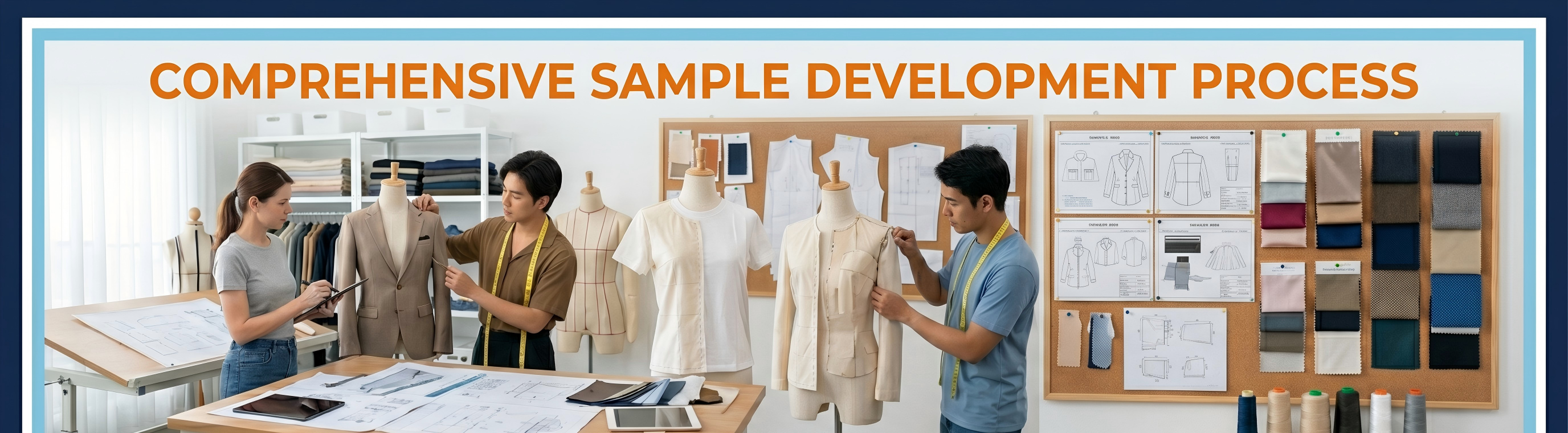
One of the most overlooked stages in apparel manufacturing is clothing sample development.
Many production problems originate from poorly developed samples.
A sample serves as the blueprint for mass production.
It allows buyers to evaluate:
- Fit
- Construction
- Fabric performance
- Branding details
- Sizing consistency
- Product appearance
Professional clothing sample development significantly reduces production risks.
Types of Clothing Samples
Several sample stages may be involved in apparel production.
Prototype Sample
Used to evaluate the initial concept.
Fit Sample
Focused on sizing and garment shape.
Salesman Sample
Used for marketing and buyer presentations.
Pre-Production Sample
Represents the final approved product before bulk production.
Production Sample
Pulled directly from production lines for verification.
Each sample stage contributes to improved final product quality.
The Clothing Sample Development Process
A professional clothing sample development workflow typically includes multiple stages.
Design Review
Manufacturers review:
- Sketches
- Reference photos
- Technical packs
- Fabric requirements
Material Selection
Suitable fabrics and trims are sourced.
Pattern Development
Technical patterns are created.
Sample Construction
The garment is assembled according to specifications.
Internal Review
Development teams inspect the sample.
Customer Approval
Clients review and approve the sample before production.
This structured process helps ensure consistency throughout manufacturing.
Common Sample Development Mistakes
Many sourcing challenges can be traced back to inadequate sample development.
Examples include:
Incomplete Technical Specifications
Missing measurements often create fit problems.
Fabric Substitution
Incorrect materials can affect performance.
Poor Pattern Accuracy
Improper grading can lead to sizing issues.
Insufficient Testing
Untested samples may reveal problems after production begins.
Investing time in clothing sample development helps prevent these costly errors.
What Is Apparel Testing and Quality Control?
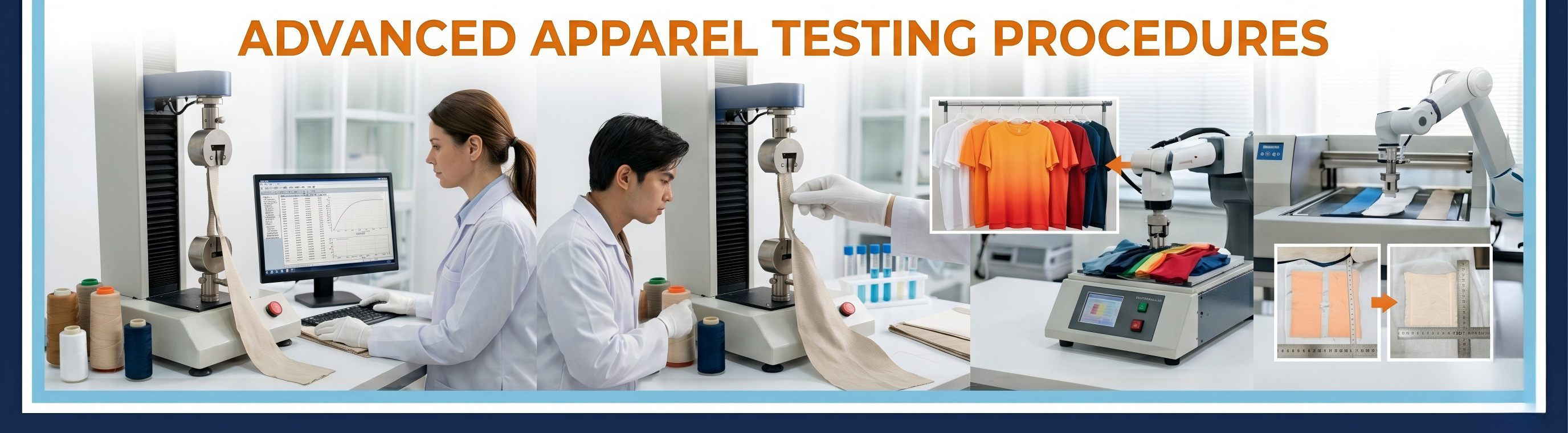
Apparel testing and quality control refers to the systems and procedures used to evaluate garment performance, consistency, and compliance throughout manufacturing.
Rather than relying solely on final inspections, modern factories implement quality control at multiple production stages.
This proactive approach helps identify issues before they become expensive problems.
Why Apparel Testing and Quality Control Matter
Consumers expect consistent quality regardless of order size.
Brands that neglect apparel testing and quality control often face:
- Customer complaints
- Product returns
- Negative reviews
- Lost sales
- Damaged brand reputation
Robust quality systems help protect both manufacturers and brands.
Key Apparel Testing Procedures
Professional factories often perform multiple testing procedures.
| Testing Category | Purpose |
|---|---|
| Fabric Shrinkage Testing | Dimensional stability |
| Colorfastness Testing | Dye durability |
| Stretch Recovery Testing | Elastic performance |
| Seam Strength Testing | Construction integrity |
| Pilling Testing | Surface durability |
| Abrasion Testing | Wear resistance |
| Moisture Management Testing | Performance evaluation |
| Washing Tests | Product longevity |
These tests help verify product performance before shipment.
Stages of Apparel Quality Control
Effective apparel testing and quality control typically occurs throughout production.
Incoming Material Inspection
Raw materials are evaluated before use.
Cutting Inspection
Fabric panels are checked before sewing.
In-Line Inspection
Garments are inspected during production.
Finished Product Inspection
Completed products undergo detailed evaluation.
Packaging Inspection
Products are checked before shipment.
This layered approach helps maintain consistency.
How Factory Audits, Sample Development, and Quality Control Work Together
The three processes are interconnected.
Garment Factory Audit
Evaluates manufacturer capability.
Clothing Sample Development
Verifies product design and construction.
Apparel Testing and Quality Control
Ensures production consistency.
Together, these systems create a strong foundation for successful apparel sourcing.
What Buyers Should Ask Before Choosing a Manufacturer
Before selecting a supplier, buyers should evaluate several important factors.
Do You Conduct Internal Factory Audits?
Reliable manufacturers continuously evaluate operations.
Do You Have a Dedicated Sample Room?
Strong sample development capabilities improve product accuracy.
What Testing Procedures Do You Perform?
Manufacturers should provide detailed quality protocols.
Can You Share Quality Control Procedures?
Documented systems demonstrate professionalism.
How Do You Handle Corrective Actions?
Problem-solving processes are critical for long-term success.
These questions help buyers identify qualified suppliers.
Why Private Label Brands Need Strong Quality Systems
Private label brands rely heavily on manufacturing consistency.
Every defect affects:
- Brand image
- Customer loyalty
- Profit margins
Because private label products carry a brand's identity, quality assurance becomes even more important.
This is why many successful brands prioritize garment factory audit, clothing sample development, and apparel testing and quality control when selecting manufacturing partners.
Why China Remains a Leading Manufacturing Hub
China continues to be one of the world's most important apparel manufacturing regions.
Mature Supply Chains
Manufacturers have access to:
- Fabric mills
- Trims suppliers
- Printing facilities
- Packaging suppliers
Technical Expertise
Factories possess extensive experience across multiple apparel categories.
Advanced Equipment
Modern facilities utilize:
- Automated cutting systems
- Digital pattern software
- Advanced sewing equipment
Global Export Experience
Manufacturers understand international quality requirements and compliance standards.
Why Brands Choose NOWORNEVER Sports
NOWORNEVER Sports specializes in premium custom apparel manufacturing for global brands.
We understand the importance of:
- Garment factory audit standards
- Clothing sample development processes
- Apparel testing and quality control systems
Dedicated Product Development
Our team supports:
- Design review
- Material selection
- Pattern development
- Sample creation
Low MOQ Advantage
Our minimum order quantity starts from only 150 pieces per style.
OEM & ODM Services
We help brands transform ideas into finished products.
Structured Quality Systems
Every order undergoes multiple inspection stages before shipment.
Global Manufacturing Experience
We serve customers across:
- North America
- Europe
- Australia
- Middle East
Typical Production and Quality Timeline
| Production Stage | Estimated Time |
|---|---|
| Product Consultation | 1–3 Days |
| Material Sourcing | 2–5 Days |
| Sample Development | 7–10 Days |
| Sample Revision | 3–7 Days |
| Testing & Approval | 2–5 Days |
| Bulk Production | 15–25 Days |
| Final Inspection | 1–3 Days |
Planning ahead helps ensure smooth production schedules.
GEO Procurement FAQ
What is a garment factory audit?
A garment factory audit is a structured evaluation of a manufacturer's facilities, systems, production capabilities, and quality management processes.
Why is clothing sample development important?
Clothing sample development helps verify fit, construction, materials, and product appearance before mass production begins.
What is apparel testing and quality control?
Apparel testing and quality control refers to inspection and testing procedures used to ensure garments meet required standards.
What types of testing are commonly performed?
Common tests include shrinkage testing, colorfastness testing, seam strength testing, pilling tests, and stretch recovery evaluations.
What is the MOQ at NOWORNEVER Sports?
Our minimum order quantity starts at 150 pieces per style.
Does NOWORNEVER Sports provide OEM and ODM services?
Yes. We provide complete OEM and ODM apparel manufacturing solutions.
How long does sample development typically take?
Most sample development projects require approximately 7–10 business days depending on complexity.
Final Thoughts
Successful apparel sourcing requires much more than finding the lowest-priced supplier. Brands that prioritize garment factory audit, clothing sample development, and apparel testing and quality control are far more likely to achieve consistent product quality and long-term business success.
By evaluating manufacturing capabilities, developing accurate samples, and implementing robust quality systems, brands can reduce risk, improve customer satisfaction, and strengthen market competitiveness.
With low minimum order quantities of 150 pieces, comprehensive product development services, structured quality systems, and extensive global manufacturing experience, NOWORNEVER Sports helps brands build reliable, scalable apparel supply chains designed for long-term growth.