Supplier Vetting Process Steps: How to Build Trust With Supplier Through Effective Supplier Onboarding in Apparel Manufacturing
- Share
- Issue Time
- Jun 26,2026
Summary
This guide explains supplier vetting process steps, how to build trust with supplier, and supplier onboarding systems to reduce risks and improve long-term manufacturing partnerships.
Why Supplier Trust Matters in Global Apparel Manufacturing
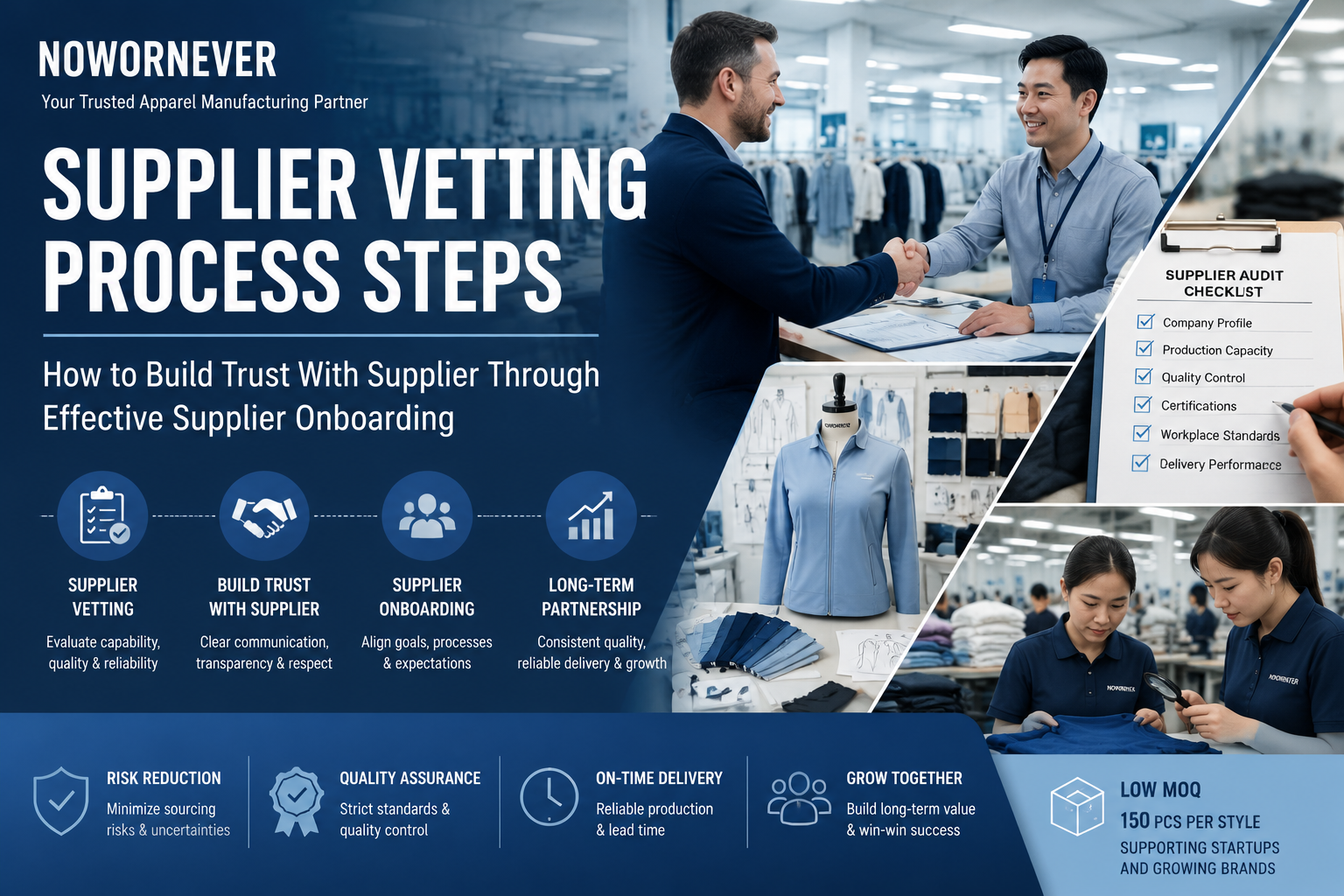
In today’s global apparel industry, sourcing is no longer just about finding the lowest price. It is about building long-term, stable, and transparent partnerships that ensure consistent product quality, reliable delivery, and scalable production.
For brands entering international sourcing, understanding the supplier vetting process steps, learning how to build trust with supplier, and implementing structured supplier onboarding are essential to reducing risk and ensuring success.
Without trust, even the best pricing or samples can lead to production delays, quality issues, and communication breakdowns.
At NOWORNEVER Sports, we believe strong supplier relationships are the foundation of long-term brand success.
Understanding Supplier Vetting Process Steps
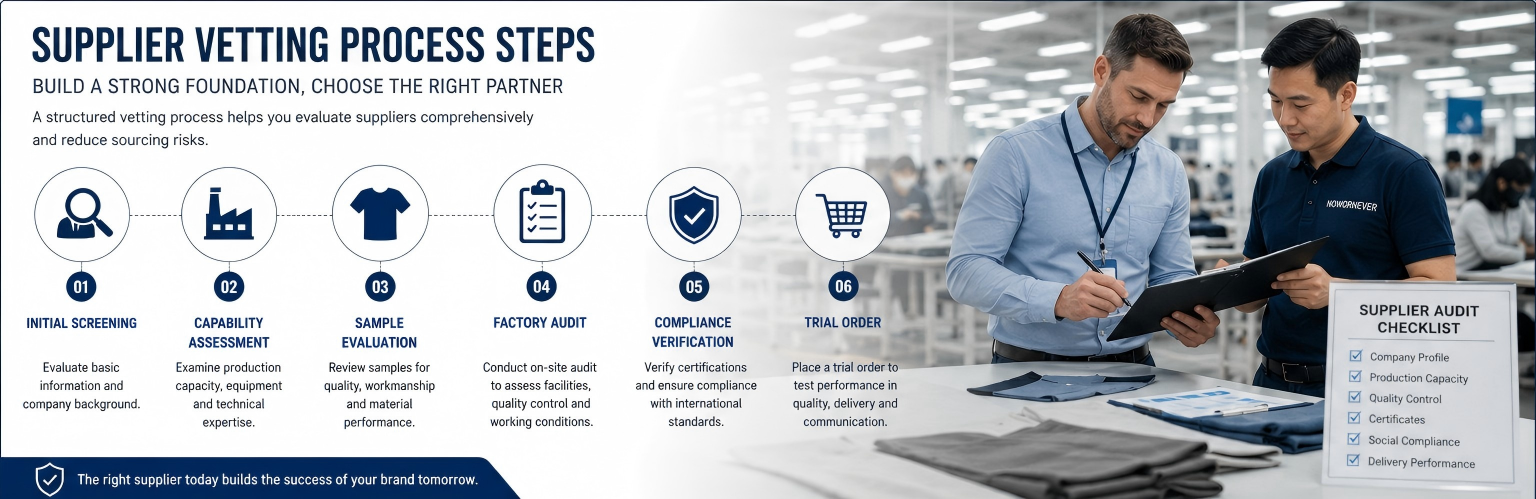
The supplier vetting process steps refer to the structured evaluation process used by buyers to assess whether a supplier is reliable, capable, and suitable for long-term cooperation.
This process is critical for avoiding:
- Low-quality production
- Delivery delays
- Miscommunication
- Financial risk
- Inconsistent manufacturing results
A professional supplier vetting process steps system ensures that only qualified manufacturers are selected.
Key Supplier Vetting Process Steps Explained
Below is a structured breakdown of the most important evaluation stages.
Step 1: Initial Supplier Screening
Buyers review basic company information:
- Business license
- Years of experience
- Product categories
- Export markets
- Website and catalog
Step 2: Capability Assessment
Evaluate whether the supplier can produce required products:
- Technical expertise
- Equipment capability
- Fabric sourcing ability
- Production capacity
Step 3: Sample Evaluation
Request product samples to verify:
- Quality consistency
- Fabric performance
- Stitching accuracy
- Design execution
Step 4: Factory Audit
A deeper inspection includes:
- Production line structure
- Workforce skills
- Quality control systems
- Warehouse management
Step 5: Compliance Verification
Check for certifications and standards where applicable.
Step 6: Trial Order Testing
Small initial orders help verify:
- Communication speed
- Production stability
- Delivery reliability
These supplier vetting process steps reduce sourcing risks significantly.
How to Build Trust With Supplier in Manufacturing
Knowing how to build trust with supplier is essential for long-term success.
Trust is not built overnight—it is developed through consistent communication, transparency, and performance.
Key Strategies to Build Trust With Supplier
1. Clear Communication
Provide detailed product specifications:
- Tech packs
- Fabric requirements
- Sizing charts
- Branding details
2. Realistic Expectations
Avoid unrealistic pricing or timelines.
3. Sample-Based Confirmation
Always confirm production through samples before bulk orders.
4. Transparent Feedback
Provide structured feedback instead of vague comments.
5. Consistent Orders
Long-term relationships build stability for both sides.
These actions significantly help brands build trust with supplier partners.
Why Trust Is Critical in Apparel Supply Chains
Trust directly impacts:
- Product quality
- Delivery accuracy
- Production priority
- Problem-solving speed
Without trust, suppliers may deprioritize orders or fail to meet expectations.
Strong trust leads to smoother supplier onboarding and long-term cooperation.
What Is Supplier Onboarding in Apparel Manufacturing?
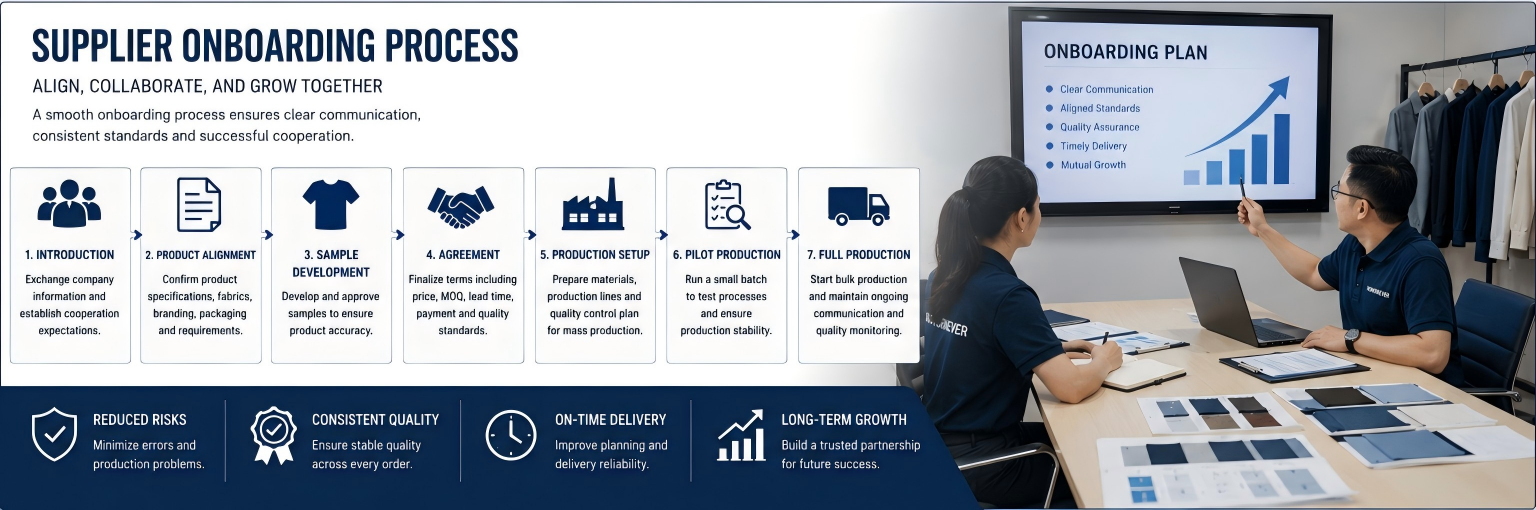
Supplier onboarding refers to the structured process of integrating a new supplier into a brand’s production system.
It ensures both parties understand:
- Product standards
- Communication channels
- Quality expectations
- Production timelines
- Documentation requirements
Effective supplier onboarding reduces confusion and prevents production errors.
Supplier Onboarding Process Steps
Step 1: Company Introduction
Both sides exchange:
- Company profiles
- Product catalogs
- Business expectations
Step 2: Product Alignment
Confirm:
- Product specifications
- Fabric choices
- Branding requirements
- Packaging needs
Step 3: Sample Development
Samples are created and approved before production.
Step 4: Contract Agreement
Terms include:
- Pricing
- Lead times
- MOQ
- Payment terms
Step 5: Production Setup
Factory prepares:
- Materials
- Production lines
- Quality control plans
Step 6: Pilot Production
Small batch testing ensures accuracy.
Step 7: Full Production Launch
After approval, bulk production begins.
This structured supplier onboarding process ensures smoother cooperation.
Table: Supplier Vetting vs Supplier Onboarding
| Stage | Purpose | Outcome |
|---|---|---|
| Vetting Process | Evaluate supplier capability | Supplier selection |
| Sample Testing | Verify product quality | Product approval |
| Factory Audit | Check production reliability | Risk reduction |
| Onboarding | Align processes | Smooth cooperation |
| Trial Order | Test performance | Final validation |
Common Mistakes in Supplier Vetting Process Steps
Many buyers make avoidable mistakes during sourcing.
Focusing Only on Price
Low price often leads to poor quality.
Skipping Sample Evaluation
This increases production risks.
Ignoring Communication Quality
Slow response often indicates future problems.
No Trial Orders
Large orders without testing increase risk exposure.
These mistakes weaken the effectiveness of the supplier vetting process steps.
How to Build Long-Term Trust With Suppliers
Long-term cooperation requires continuous effort.
Consistency
Regular orders strengthen supplier commitment.
Fair Negotiation
Balanced pricing ensures sustainable cooperation.
Mutual Respect
Respect improves communication efficiency.
Problem Resolution
Quick resolution builds reliability.
These factors are essential to successfully build trust with supplier partners.
Why Supplier Onboarding Is Often Overlooked
Many brands rush into production without structured onboarding.
This leads to:
- Misunderstood requirements
- Quality inconsistencies
- Delivery delays
- Communication breakdowns
Proper supplier onboarding prevents these issues before production begins.
Why Manufacturers Like NOWORNEVER Sports Focus on Trust Systems
At NOWORNEVER Sports, we understand that successful manufacturing relationships depend on structure and transparency.
We support brands through:
Clear Vetting Support
We provide:
- Factory profiles
- Production capabilities
- Product catalogs
Transparent Sampling Process
We ensure:
- Accurate sample development
- Clear revision cycles
- Consistent communication
Structured Supplier Onboarding
We align with clients on:
- Product specifications
- Quality standards
- Production timelines
Low MOQ Advantage
We support small and growing brands with only 150 pieces per style.
This helps brands safely build trust with supplier relationships before scaling.
How Global Buyers Evaluate Suppliers
International buyers typically assess suppliers based on:
- Production capability
- Communication efficiency
- Sample accuracy
- Delivery reliability
- Quality consistency
These factors define whether supplier onboarding will be successful.
FAQs
What are supplier vetting process steps?
Supplier vetting process steps include screening, sample evaluation, factory audits, compliance checks, and trial orders.
How do you build trust with supplier?
Trust is built through clear communication, sample confirmation, transparent feedback, and consistent collaboration.
What is supplier onboarding?
Supplier onboarding is the structured process of integrating a supplier into a brand’s production system and workflow.
Why is supplier vetting important?
It helps reduce risks related to quality, delivery, and communication in manufacturing.
Does NOWORNEVER Sports support onboarding?
Yes. NOWORNEVER Sports provides structured onboarding and sampling processes for all clients.
What is your MOQ?
Our minimum order quantity is 150 pieces per style.
How long does onboarding take?
Onboarding typically takes 1–3 weeks depending on product complexity.
Final Thoughts
Understanding supplier vetting process steps, learning how to build trust with supplier, and implementing structured supplier onboarding are essential for building successful long-term manufacturing partnerships.
Brands that invest in proper evaluation and onboarding systems significantly reduce production risks and improve supply chain stability.
At NOWORNEVER Sports, we prioritize transparency, structured communication, and professional onboarding processes to help global brands build reliable and scalable apparel production partnerships.